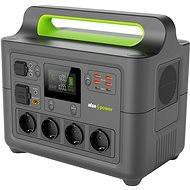
Die Poseidon 1228 Wh Station ist insgesamt sehr gut. Es handelt sich ursprünglich um das chinesische Produkt Sugineo P1000 unter der Marke Alzapower. Es bietet eine sehr hohe Kapazität, Leistung und Ladegeschwindigkeit.
Im Vergleich zu unserem Konkurrenten EcoFlow River Pro, der das gleiche kostet, bietet Poseidon die 1,7-fache Kapazität in Wh. Allerdings hat es eine schlechtere Wh pro kg Gewicht, 77,3 Wh/kg für Poseidon und 94,7 Wh/kg für River Pro. Das liegt an der unterschiedlichen Akkutechnologie LiFePO4 im Poseidon, Li-Ion im River Pro. Der Vorteil der LiFePO4-Technologie besteht in einer viel höheren Anzahl von Zyklen, bevor die Batteriekapazität auf 80 % sinkt. Konkret 2000 Zyklen für Poseidon, 800 Zyklen für River Pro.
Die Station lädt mit 1000 Watt, wenn sie an einer Steckdose aufgeladen wird. Das ist sehr schnell, aber es wird ein sehr lautes Gebläse aktiviert, um die Batterie abzukühlen, wenn sie so intensiv geladen wird. Hier sehe ich einen großen Nachteil gegenüber dem River Pro, bei dem man die Ladegeschwindigkeit in der Smartphone-App reduzieren kann. Poseidon verfügt weder über eine App noch über eine Taste zum Ändern der Ladegeschwindigkeit. Die Möglichkeit, die Ladegeschwindigkeit zu verringern, wäre nicht nur wegen der Geräuschentwicklung, sondern auch wegen des geringeren Verschleißes der Batterie nützlich. Ich habe bisher keine Probleme mit dem Betrieb festgestellt.
Wie ich bereits schrieb, ist dies ein Rebranding-Produkt Sugineo P1000, aber was man beachten sollte, ist, dass im Vergleich zu dieser chinesischen Version in Poseidon von Alza ist nicht in der Verpackung Kabel zum Aufladen der Station von 12V Steckdose und Handbuch enthalten. Ich löste es mit Alza Unterstützung und es ist die Absicht, eine solche Einsparung auf das Kabel für ein Gerät für 19 Tausend wirklich überrascht mich unangenehm. Und es wäre schön, wenn der Inhalt des Pakets auf der Produktseite oder zumindest im Handbuch beschrieben wäre, wie es üblich ist. Ansonsten ist der Bahnhof bis auf das Aussehen identisch, und rein subjektiv gefällt mir die Farbgebung des Alza besser als die des Originals. Die Station sieht nicht so aus wie auf den Produktbildern, der Kunststoff ist in Wirklichkeit viel dunkler und hat eine feine Textur auf der Oberfläche. Noch etwas zum Handbuch, das hier nur im PDF-Format verfügbar ist. Dort heißt es, dass der Solareingang des XT60 12-30V/7A und der des DC 5521 12-30V/7A beträgt. Aber auf dem Etikett des Produkts selbst steht: MPPT-Solareingang: 12V-28,5V/10,0A und DC-Eingang: 12V-28,5V/7,0A. Die Werte sind also recht unterschiedlich, aber auch hier habe ich mich mit Alsa in Verbindung gesetzt, und das Handbuch enthält die falschen Informationen, während die Daten auf dem Etikett gültig sind, und sie sagen, sie werden das Handbuch korrigieren.
Ich habe versucht, die Station mit dem EcoFlow-Solarmodul (110 W) aufzuladen, aber selbst bei direkter Sonneneinstrahlung lieferte es nur etwa 60-65 W an die Station, so dass die Station in 20 Stunden vollständig aufgeladen war. In den Kommentaren hier zum Produkt kündigte Alza an, dass im April 2022 ein neues, für diese Station geeignetes 200-W-Panel erhältlich sein wird, das hoffentlich eine viel bessere Wahl sein wird.